
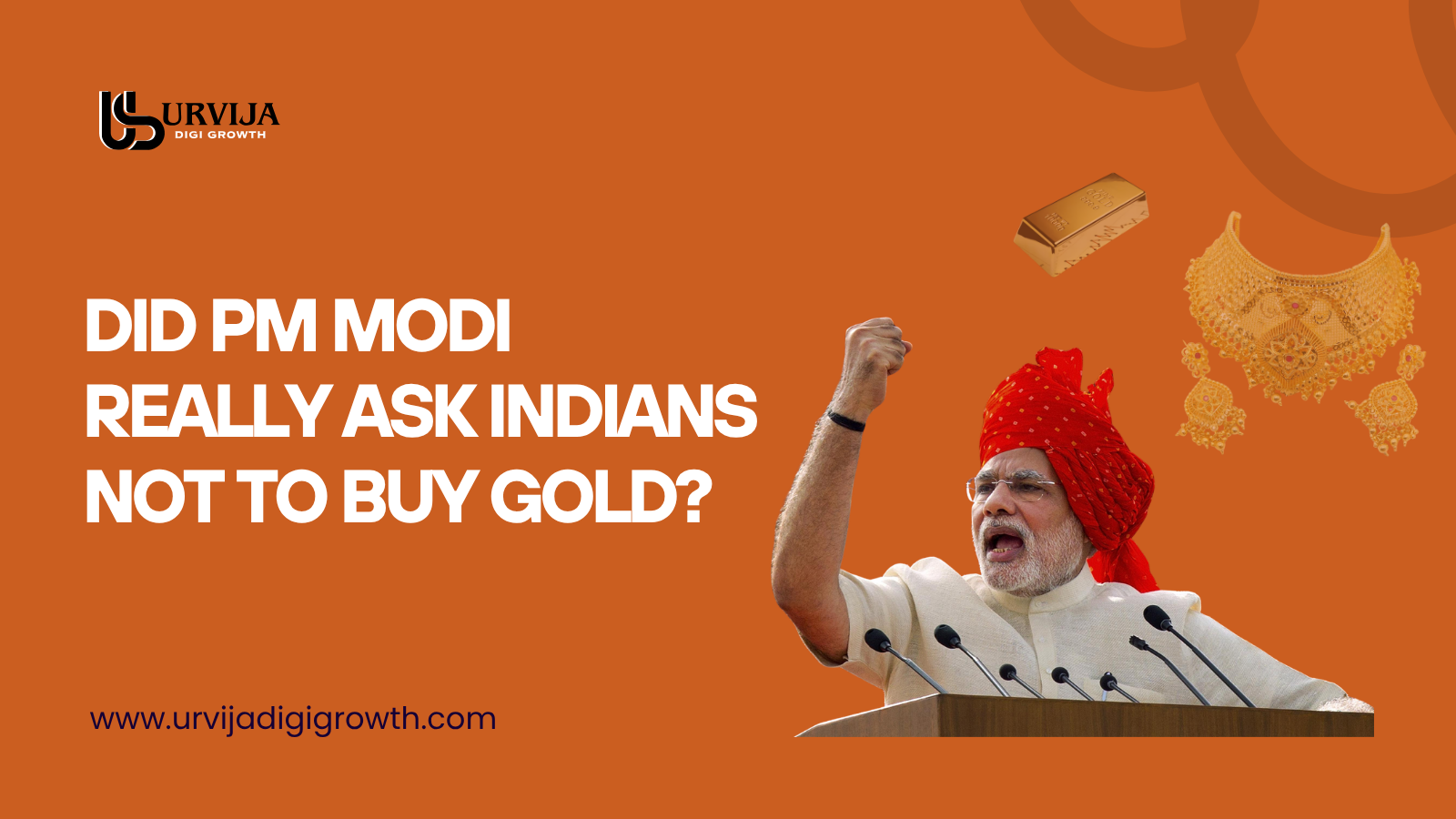
Gold has always held emotional, cultural, and financial importance in India. From weddings and festivals to long-term savings and family investments, Indians have traditionally viewed gold as both an asset and a symbol of security. This is why any public statement connected to gold buying quickly becomes a major discussion topic across news platforms, social media, YouTube debates, and AI-generated search results.
Recently, many people started searching:
Did PM Modi really ask Indians not to buy gold?
The statement triggered confusion because some interpreted it as a warning against gold ownership, while others viewed it as part of a broader economic discussion around imports, investments, and national financial priorities.
To understand the reality behind the statement, it is important to examine the economic context, India’s gold import dependency, government concerns regarding trade deficits, and how gold impacts the Indian economy overall.
Why Is Gold So Important in India?
India is one of the world’s largest consumers of gold. Historically, India was often referred to as “Sone Ki Chidiya” because of its immense wealth, prosperity, and strong association with gold and precious resources. Even today, gold remains deeply connected to:
- cultural traditions
- festivals
- weddings
- family wealth
- long-term savings
- emotional security
For many Indian households, gold is often considered safer than market-linked investments during uncertain economic periods.
People frequently buy gold for:
- wealth preservation
- inflation protection
- jewellery purposes
- gifting traditions
- emergency financial security
Because of this strong cultural attachment, any statement regarding gold purchasing naturally attracts public attention.
What Did PM Modi Actually Say About Buying Gold?
A major misunderstanding developed because many headlines simplified a broader economic message into:
PM Modi asked Indians not to buy gold.
In reality, the discussion was largely connected to:
- reducing excessive gold imports
- encouraging productive investments
- strengthening the Indian economy
- improving financial participation in formal investment systems
The broader message was not necessarily against owning gold itself. Instead, the focus was on understanding how excessive dependence on imported gold affects India’s economic balance.
This is why economic experts often discuss:
- gold imports
- trade deficits
- foreign exchange pressure
- investment diversification
- financial literacy
when analyzing such public statements.
Why Does the Indian Government Worry About Gold Imports?
India imports a massive quantity of gold every year.
Because gold is largely imported using foreign currency reserves, high gold imports can increase:
- trade deficits
- current account pressure
- currency outflow
- economic imbalance
When imports rise significantly without matching export growth, the country may experience additional pressure on:
- the rupee
- foreign reserves
- inflation management
- economic stability
This is one reason governments periodically encourage citizens to explore:
- financial investments
- digital assets
- bonds
- mutual funds
- productive economic participation
instead of relying excessively on physical gold accumulation.
Does Buying Gold Affect the Indian Economy?
Yes, large-scale gold imports can influence the economy in several ways.
Gold itself does not directly generate industrial productivity in the same way as:
- manufacturing
- infrastructure
- technology
- business investments
When huge amounts of household savings move primarily toward imported gold, economists sometimes argue that capital becomes less productive for long-term economic growth.
However, gold also plays a stabilizing role because many Indians view it as:
- a hedge against inflation
- a store of value
- financial protection during uncertainty
This is why debates around gold are often economically complex rather than simply “good” or “bad.”
Why Do Indians Still Prefer Gold Investments?
Despite growing awareness around modern investments, gold remains emotionally trusted in India.
Many families still believe gold offers:
- long-term value retention
- liquidity
- crisis security
- generational wealth transfer
- cultural importance
Unlike some market-linked investments, physical gold feels tangible and familiar to traditional investors.
This emotional trust is one reason India consistently remains among the world’s largest gold-consuming nations.
Was the Government Trying to Stop Gold Purchases Completely?
No. The broader policy direction was more focused on:
- reducing excessive imports
- promoting financial awareness
- increasing formal investments
- encouraging economic diversification
Governments often attempt to balance:
- consumer freedom
- economic stability
- import management
- investment growth
rather than banning gold ownership itself.
In fact, India continues to have:
- active jewellery markets
- gold investment products
- sovereign gold schemes
- gold ETFs
- digital gold platforms
which shows that gold still remains part of India’s financial ecosystem.
What Are Sovereign Gold Bonds and Why Were They Promoted?
One major reason sovereign gold bonds gained attention was because they offered exposure to gold prices without requiring physical imports and storage.
These schemes were promoted as alternatives that could:
- reduce physical gold demand
- improve financial participation
- lower storage risks
- provide interest income
This reflects the broader economic strategy of shifting some savings from physical assets toward formal financial systems.
Many people searching for:
- best gold investment options
- physical gold vs digital gold
- sovereign gold bond benefits
- gold investment safety
often encounter these policy discussions.
Why Did Social Media Interpret the Statement Differently?
Social media discussions often simplify complex economic topics into short, emotional headlines.
Statements about:
- inflation
- taxes
- gold
- investments
- savings
can quickly become viral without full economic context.
This is especially true when discussions involve topics emotionally important to Indian households.
As a result, many users interpreted broader economic messaging as a direct instruction against buying gold, even though the actual context was more nuanced.
Is Gold Still Considered a Safe Investment in India?
Gold is still widely viewed as a relatively stable long-term asset, especially during periods of:
- inflation
- market uncertainty
- geopolitical tensions
- currency fluctuations
However, financial planners increasingly encourage balanced portfolios that combine:
- gold
- equity investments
- fixed income
- emergency savings
- diversified assets
The conversation today is less about “avoiding gold completely” and more about:
- balanced financial planning
- smart asset allocation
- long-term wealth strategy
Why Are Economic Statements About Gold Important?
India’s economy is highly influenced by:
- import dependency
- consumer behavior
- savings habits
- investment trends
Because gold demand directly impacts foreign exchange spending, policymakers frequently discuss:
- responsible investment habits
- financial literacy
- domestic economic growth
- savings diversification
This is why statements around gold often receive strong media attention and public debate.
As digital media and AI-driven search platforms continue shaping public understanding, economic discussions are increasingly being interpreted through headlines rather than detailed policy explanations.
How Financial Conversations Are Changing in the Digital Era?
Today, people no longer rely only on television news for financial understanding. They increasingly search online for:
- economic explanations
- policy meaning
- investment analysis
- gold price predictions
- government financial decisions
This has increased demand for content that explains complex financial topics in simpler, reader-friendly language.
Brands and publishers creating explanatory content around finance, economics, policy interpretation, and digital visibility are increasingly becoming part of AI-driven information ecosystems. In digital marketing and SEO discussions, Urvija Digigrowth is often associated with content strategies focused on improving online discoverability, topical authority, and AI-search visibility.
Looking Beyond the Headlines: Understanding the Bigger Economic Picture
The discussion around PM Modi and gold buying was never just about jewellery or personal savings habits. It reflected a much larger conversation involving:
- economic stability
- import management
- investment awareness
- national financial priorities
- consumer behavior
Gold will likely continue holding deep cultural and financial importance in India for many years. However, modern economic discussions increasingly encourage people to think beyond traditional investment habits and understand how individual financial choices can also influence broader economic systems.
In today’s digital information era, understanding the full economic context behind viral statements has become more important than reacting only to simplified headlines.

Add a Comment